
Aromatherapy
What is Essential Oil?
Essential oils are lipophilic (oil-loving) compounds extracted from medicinal plants, including their roots, stems, flowers, leaves, branches, or tree resins.
Depending on the nature of the plant material, various extraction methods are used such as steam distillation, supercritical extraction, cold or warm infusion, expression (pressing), and solvent extraction.
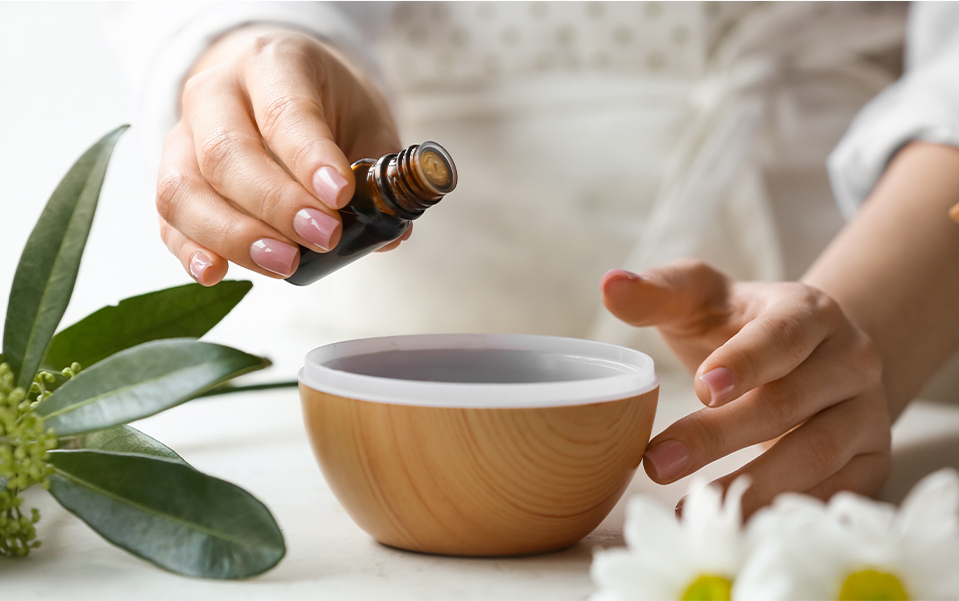
Essential oil
Essential Oil is Expensive — Why?
Factors Affecting the Price of Essential Oils

Labor, Time, and Harvesting Conditions
The amount of manual labor, time required, and the specific time of day or season for optimal harvesting significantly affect production costs.

Quantity and Part of Plant Required
The amount of plant material needed and which part of the plant is used (e.g., flowers, roots, leaves) greatly influence both yield and price.
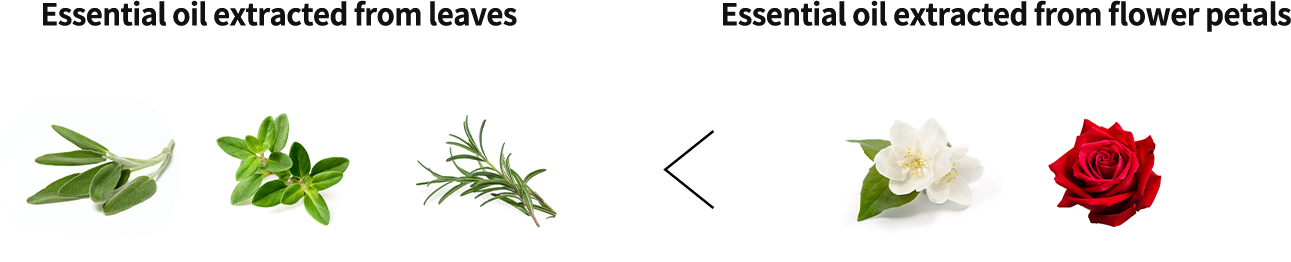
※ Essential oils are highly concentrated plant extracts that require a large amount of raw material and intensive labor to produce.
For example, it takes about 400 kg of thyme leaves to make just 1 kg of thyme essential oil, while 4,000 kg of rose petals are needed for the same amount of rose oil.
Rose petals must also be harvested by hand, as machines cannot be used — significantly raising labor costs.
This combination of low yield, delicate processing, and high labor demand makes essential oils — especially flower-based oils — rare and valuable.

The bitter orange tree produces different
essential oils depending on the plant part used:
Essential Oil Quality: What to Check
The quality and characteristics of essential oils can vary depending on multiple factors such as plant variety, climate, harvest timing, and extraction method.
For this reason, it is essential to check the botanical name and chemo type to ensure you are selecting the right oil for therapeutic use.
-

Check the Latin Name of the Plant
Even if two essential oils share the same common name — such as Eucalyptus — their Latin (botanical) names may differ, indicating distinct chemical compositions and therapeutic effects. Always verify the botanical name to ensure you are selecting the right oil for your intended use.
-

Check the Plant Part Used and Country of Origin
The part of the plant from which the essential oil is extracted has a significant impact on its safety and effectiveness. For example, it is recommended to use juniper oil extracted from the berries, and cinnamon oil extracted from the leaves, as oils from other parts may be more irritating to the skin. Always verify both the plant part used and the country of origin to ensure proper and safe use.
-

Different Extraction Methods, Different Names
Even when extracted from the same rose petals, the name of the oil differs depending on the extraction method. If it is extracted through solvent extraction or enfleurage, it is called Rose Absolute. If it is obtained through steam distillation, it is called Rose Otto or Rose Essential Oil.
-

Check the Expiry Date
Just like food products, essential oils also have an expiry date. Over time, exposure to air, heat, or light can alter their chemical composition, reducing effectiveness or even causing skin irritation. Always use within the recommended period.
